
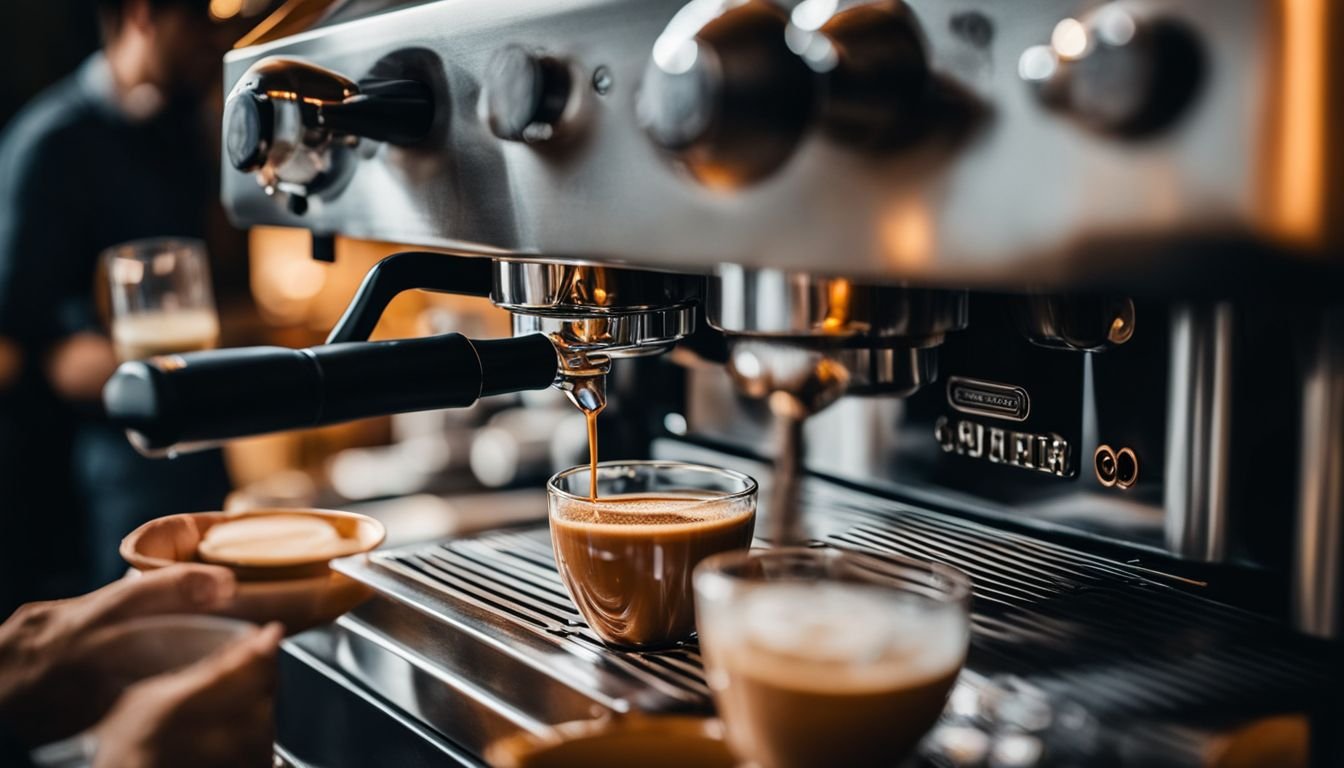
Yes, you can make espresso with regular coffee beans. “Espresso beans” are not a separate species of coffee. Espresso describes the brewing method: finely ground coffee is brewed under pressure to produce a concentrated shot.
The same beans sold for drip coffee, pour-over or French press can be used in an espresso machine. What changes is the grind, dose and extraction—not the botanical type of bean.
Espresso vs. regular coffee
| Espresso | Typical drip coffee |
|---|---|
| Fine grind | Medium grind |
| Brewed under pressure | Water passes through grounds mainly by gravity |
| Small, concentrated serving | Larger, less concentrated serving |
| Often around a 1:2 brew ratio | Often around a 1:15–1:17 coffee-to-water ratio |
| Can produce crema | Does not produce espresso crema |
The beans themselves can be identical. A bag labeled “espresso roast” is usually the roaster’s recommendation for how that coffee tastes in espresso, not a requirement for making espresso.
Can you put regular coffee beans in an espresso machine?
Yes. Whole beans sold as regular coffee can be ground for espresso and used normally in an espresso machine.
The key is to grind them finely enough for the machine and then dial in the shot. If coffee rushes through too quickly, grind finer. If the machine barely produces a drip, grind coarser.
Our espresso brewing guide covers the basic extraction process, while the coffee grind-size guide explains how grind changes flow.
Do you need dark-roast coffee for espresso?
No. Dark roast is common in traditional espresso blends because it can produce chocolatey, nutty and bittersweet flavors, but medium and light roasts can also make excellent espresso.
Lighter roasts can be harder to dial in because they are denser and often benefit from different extraction parameters, but there is no rule that espresso must use dark-roasted beans.
What if you only have pre-ground regular coffee?
You can try it, but pre-ground drip coffee is often too coarse for a traditional single-wall espresso basket. Water may run through too quickly, giving you a thin, sour or weak shot.
If your machine includes a dual-wall or pressurized basket, it is more forgiving of pre-ground coffee. For the best control, however, grind whole beans immediately before brewing.
What makes a coffee good for espresso?
Instead of looking only for the word “espresso” on the bag, consider:
- Freshness: freshly roasted beans are easier to dial in and generally taste better.
- Roast profile: choose a roast whose flavors you enjoy.
- Grind control: espresso needs small grind adjustments.
- Consistency: a burr grinder helps produce even particles.
- Taste: the best espresso bean is ultimately one that tastes good at your preferred recipe.
Can you make espresso without an espresso machine?
Not in the strict technical sense. A Moka pot, AeroPress or French press can make concentrated coffee, but they do not reproduce the same pressure-based extraction as an espresso machine.
They can still be useful when you want a strong coffee for milk drinks or recipes, but calling the result “espresso-style coffee” is more accurate.
AeroPress
An AeroPress can brew a short, concentrated cup. Use a relatively fine grind, a small amount of water and a short steep, then press steadily. It will be strong and concentrated, but it is not the same as a café espresso shot.
See our AeroPress brewing guide.
Moka pot
A Moka pot uses steam pressure to push water through coffee and produces a concentrated brew with more body than drip coffee. It is one of the closest traditional alternatives to espresso for milk drinks, but its pressure and extraction are different from an espresso machine.
French press
A French press can make strong coffee by using more coffee relative to water, but it is an immersion brewer and does not create espresso pressure or crema.
See our French press brewing guide.
Starting recipe for regular beans in an espresso machine
A practical starting point for a double espresso is:
- About 18 g of coffee in the basket, if your basket is designed for that dose
- A fine espresso grind
- About 36 g of espresso out
- Roughly 25–30 seconds as an initial diagnostic range
These are starting numbers, not rules. Basket size, coffee and machine all matter. Taste the result and adjust the grind rather than chasing one exact time.
Common problems when using regular coffee for espresso
| Problem | Likely cause | Adjustment |
|---|---|---|
| Shot gushes out | Grind too coarse / dose too low | Grind finer |
| Machine barely drips | Grind too fine / dose too high | Grind coarser |
| Sour, thin espresso | Under-extraction | Increase extraction by grinding finer or adjusting yield |
| Harsh, very bitter espresso | Over-extraction | Grind slightly coarser or shorten yield |
| No crema with old beans | Bean age | Use fresher coffee |
Regular coffee vs. espresso roast
An espresso-labeled coffee can make dialing in easier because the roaster selected and roasted it with espresso in mind. But it is a preference, not a technical requirement.
You can also brew espresso-roast beans in a drip machine. The brewing method and grind determine whether the beverage is espresso—not the label on the bag.
FAQ
Can any coffee bean be used for espresso?
Most roasted coffee beans can be used. Arabica, Robusta and blends can all be brewed as espresso if ground and extracted appropriately.
Can I use regular pre-ground coffee?
You can, especially with a pressurized basket, but standard drip-ground coffee is often too coarse for a traditional espresso basket.
Is espresso stronger than regular coffee?
Espresso is more concentrated by volume, but total caffeine depends on the amount of coffee used and serving size. A large cup of drip coffee can contain more total caffeine than one espresso shot.
Is a Moka pot true espresso?
No. It makes concentrated coffee using steam pressure, but it does not operate at the same brewing pressure as an espresso machine.
Do I need an espresso roast?
No. Choose beans based on freshness and flavor preference, then dial in the grind for your machine.
If your question is specifically whether espresso-style coffee can go into a drip brewer, see Can You Put Espresso in a Coffee Maker?
